

Reader support is what makes Oracle Ayano possible. I am pouring my heart into building a generative AI system for large-scale data gathering, analytical synthesis, and article verification, so each piece can offer both accuracy and a fresh perspective. Please consider supporting the project.
Observation
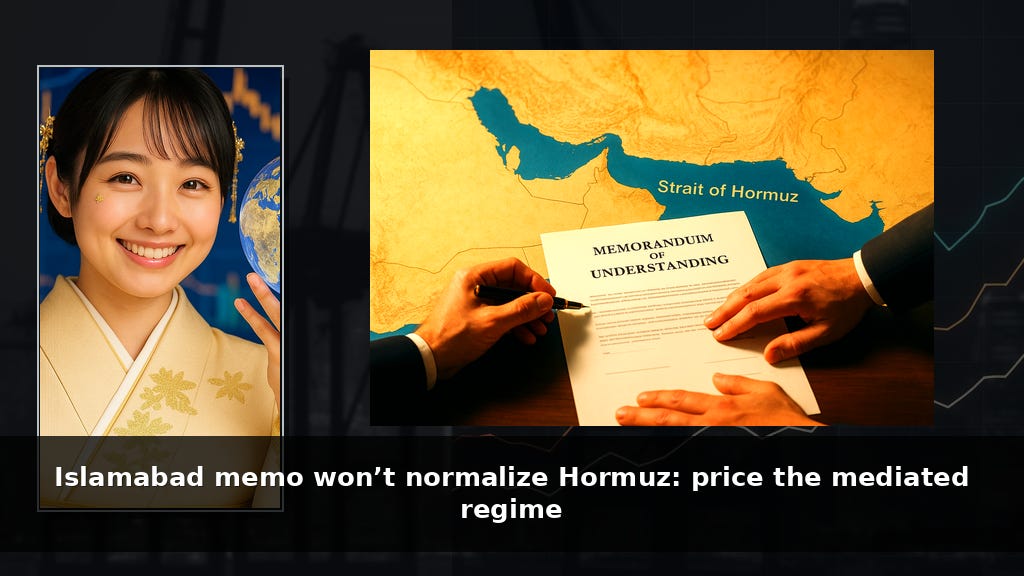
On June 12–13, 2026, U.S. and Iranian officials signaled they had agreed on the wording of an initial memorandum to halt their three‑month war, with Washington expecting to sign within days. Mediators cited include Pakistan and Qatar, and reported draft terms cover reopening the Strait of Hormuz and a 60‑day follow‑on track for nuclear talks. Brent crude fell more than 3% intraday on the headlines, while U.S. Central Command (CENTCOM) reported intercepting Iranian one‑way attack drones near the strait and said the waterway remained open. About one‑fifth of the world’s oil supply normally transits Hormuz. (marketscreener.com)
The debate that matters: whether a signed Islamabad memorandum that “reopens” the Strait of Hormuz actually removes Iran’s operational leverage over global oil transit, or instead institutionalizes a mediated regime that preserves Iranian leverage. It matters for insurance pricing, tanker routing, and input‑cost assumptions across energy, shipping, and heavy‑industry balance sheets in Q3–Q4.
Our stance: for energy‑exposed equity PMs, corporate treasury, and supply‑chain heads, price a mediated reopening, not a return to 2025 norms. Hedge for persistently elevated war‑risk and freight add‑ons, and keep bypass capacity and insurers’ signals central to your model assumptions.
